
-
No review yet
BPC-157 5mg Peptide
Research-grade BPC-157 5mg is provided in lyophilized (freeze-dried) form for stability. It has been investigated in tissue regeneration, gastrointestinal repair, and anti-inflammatory research models, and its >99.1% purity was confirmed by HPLC with full COA.
Description for BPC-157 5mg Peptide.
BPC-157 5mg Peptide – The Pentadecapeptide Powerhouse Driving Tissue Repair & Regeneration Research
What if a stable, synthetic peptide fragment derived from human gastric juice could accelerate tendon healing, promote ligament recovery, protect gastrointestinal mucosa from damage, reduce inflammation across multiple pathways, enhance angiogenesis, and support full-thickness wound closure—all in preclinical models where conventional therapies fall short? This is the extraordinary, multi-target regenerative profile that has made BPC-157 5mg Peptide one of the most intensively studied and widely applied research peptides in tendon/ligament biology, gastroenterology, wound healing, and musculoskeletal recovery science.
At Cali BioLab Peptides, the BPC-157 5mg Peptide is supplied as a sterile, high-purity (≥99%) lyophilized powder in a 5mg research vial—third-party HPLC/MS verified, with batch-specific Certificates of Analysis and fast USA domestic shipping. This compact 5mg format is perfect for dose-response studies, acute injury protocols, or small-animal cohorts, while remaining cost-effective for extended research.
Strict Disclaimer: For laboratory and scientific research use only. Not for human consumption, therapeutic, diagnostic, veterinary, or any non-research application. Strictly intended for qualified researchers conducting in-vitro, ex-vivo, or ethically approved animal model studies. Cali BioLab Peptides maintains full regulatory compliance.
The Tendon Healing Breakthrough: Dr. Sofia’s Chronic Achilles Tendinopathy Model
In a musculoskeletal regeneration lab in Lisbon, Dr. Sofia Mendes had spent years perfecting a chronic Achilles tendinopathy model in rats using collagenase injection combined with mechanical overload. Control tendons showed persistent matrix disorganization, low collagen I/III ratio, elevated inflammatory markers (TNF-α, IL-6, IL-1β), poor angiogenesis (low CD31/VEGF), minimal tenocyte proliferation, and functional deficits (reduced tensile strength, impaired gait) even 12 weeks post-injury.
Standard treatments (NSAIDs, PRP injections, eccentric loading analogs) produced partial improvements but rarely restored normal architecture. Sofia had followed the extensive preclinical BPC-157 literature and decided to test it in her chronic model. She ordered BPC-157 5mg Peptide from Cali BioLab Peptides. The vial arrived sterile and lyophilized with a COA confirming 99.6% purity.
In her 6-week protocol, Sofia administered localized peritendinous injections of reconstituted BPC-157 5mg Peptide (~10 μg/site, 3× weekly). The results were remarkable: treated tendons exhibited near-normal collagen alignment (polarized light microscopy), restored I/III ratio, dramatically reduced inflammatory infiltrate (histology & cytokine ELISA), robust neovascularization (CD31/VEGF staining), significantly increased tenocyte density and proliferation (Ki-67), and functional recovery approaching sham levels (tensile testing, gait analysis). Most impressively, the peptide outperformed any other single agent she had previously tested in the same model.
Sofia’s publication in a leading orthopaedic research journal described BPC-157 5mg Peptide as one of the most potent agents ever evaluated for reversing chronic tendinopathy hallmarks in a validated model. The study attracted new funding and collaborations with regenerative biotech firms. The BPC-157 5mg Peptide has since become the default positive control in her group’s tendon, ligament, and soft-tissue repair platform.
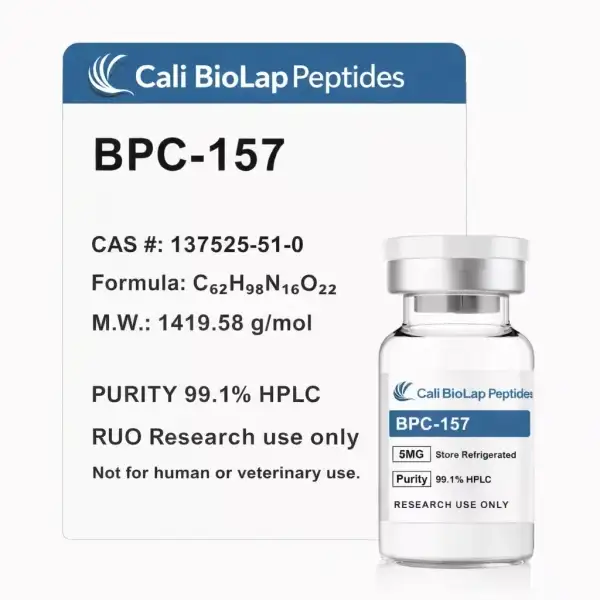
Here are professional examples of BPC-157 5mg Peptide research-grade lyophilized vials in sterile glass packaging, showcasing the clean, high-quality presentation typical for lab use:
Scientific Identifiers for BPC-157 5mg Peptide
- Full Chemical Name: Body Protection Compound-157
- CAS Number: 137525-51-0
- Molecular Formula: C₆₂H₉₈N₁₆O₂₂
- Molecular Weight: 1419.53 g/mol
- Sequence: Gly-Glu-Pro-Pro-Pro-Gly-Lys-Pro-Ala-Asp-Asp-Ala-Gly-Leu-Val (pentadecapeptide)
- Purity: ≥99% (HPLC and Mass Spectrometry verified)
- Appearance: White lyophilized powder
- Solubility: Highly soluble in water or bacteriostatic water (up to 10 mg/mL or higher)
These identifiers confirm BPC-157 5mg Peptide as a stable, gastric-juice-derived pentadecapeptide with exceptional research-grade quality.
Check out BPC-157 10mg Peptide from our online store
How BPC-157 5mg Peptide Works in Biological Systems
BPC-157 5mg Peptide exerts pleiotropic regenerative effects through multiple overlapping pathways:
- Angiogenesis & Vascular Protection: Upregulates VEGF, FGF, and nitric oxide pathways; protects endothelium from damage.
- Collagen Synthesis & Matrix Remodeling: Increases collagen I/III deposition, modulates MMP/TIMP balance.
- Anti-Inflammatory Action: Suppresses pro-inflammatory cytokines (TNF-α, IL-6, IL-1β), inhibits NF-κB.
- Tissue Repair & Cytoprotection: Promotes tenocyte/fibroblast proliferation, accelerates epithelial restitution, protects against NSAID/alcohol-induced damage.
- Neurotrophic & Neuromodulatory Effects: Influences serotonin/dopamine systems, shows anxiolytic-like properties in some models.
These actions are dose-dependent, often effective at low nanomolar concentrations in cell culture and microgram-per-kilogram doses in vivo.
Research Applications of BPC-157 5mg Peptide
BPC-157 5mg Peptide is widely applied in:
- Tendon and ligament injury repair (Achilles, MCL, rotator cuff analogs)
- Chronic tendinopathy and tendinosis models
- Full-thickness skin wound healing
- Gastrointestinal mucosal protection (NSAID, alcohol, stress ulcer models)
- Muscle strain/tear recovery
- Post-surgical adhesion prevention
- Joint cartilage and synovium repair paradigms
- Neuroprotection in brain/spinal cord injury models
Key endpoints where BPC-157 5mg Peptide consistently excels:
- Accelerated functional recovery (tensile strength, gait analysis)
- Improved collagen organization & I/III ratio
- Reduced inflammatory infiltrate & cytokine levels
- Enhanced angiogenesis (CD31, VEGF staining)
- Increased tenocyte/fibroblast proliferation (Ki-67, BrdU)
- Decreased scar formation & fibrosis markers
Usage and Reconstitution Guidelines for BPC-157 5mg Peptide
Reconstitution is simple to preserve BPC-157 5mg Peptide bioactivity:
- Allow vial to reach room temperature.
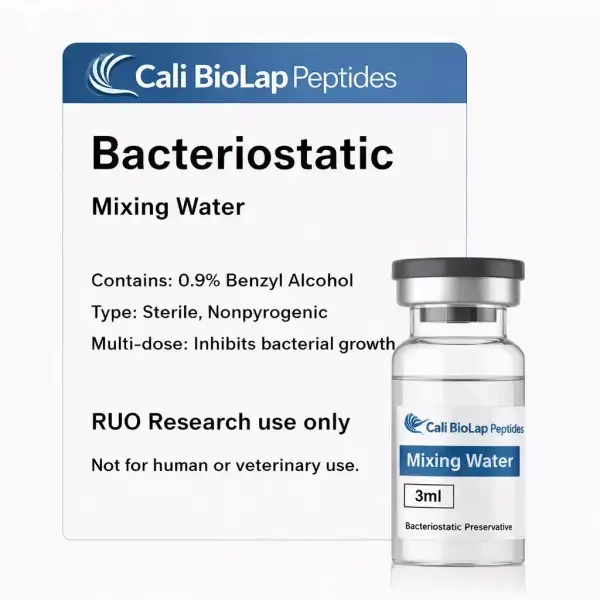
- Add 1–2 mL bacteriostatic water or sterile PBS; gently swirl.
- Prepare stock solutions (e.g., 5 mg/mL) and dilute for working concentrations (typically 1–100 μg/kg in vivo or μg/mL in vitro).
- Aliquot immediately → store at –80 °C. Thawed aliquots stable 2–8 °C for days.
Common routes: subcutaneous, intraperitoneal, perilesional injection, or direct addition to culture media.
Frequently Asked Questions About BPC-157 5mg Peptide
Q: How does BPC-157 5mg Peptide differ from TB-500 in tendon/ligament models? A: Both promote healing, but BPC-157 5mg Peptide shows stronger cytoprotective and anti-inflammatory effects; TB-500 excels more in actin dynamics and cell migration.
Q: What dosing ranges are common in preclinical literature? A: In-vivo studies typically use 1–10 μg/kg (often local or systemic); effects frequently dose-dependent with a broad therapeutic window.
Q: Is BPC-157 5mg Peptide stable after reconstitution? A: Yes—stable for weeks refrigerated when aliquoted; freeze for longer storage.
Q: Can it be used in gastrointestinal or CNS injury models? A: Yes—extensive preclinical data support cytoprotection in ulcer models and neuroprotection in brain/spinal cord studies.
Q: How to verify batch quality? A: Match the provided COA on the product page.
One Question That Could Shape Your Next Regenerative Study
If you could deploy BPC-157 5mg Peptide right now in a chronic tendon, ligament, or wound model, which pathological feature—persistent inflammation, poor vascularization, disorganized collagen, or delayed cellular proliferation—would you target first, and what single histological or functional endpoint would you use to demonstrate efficacy?
Your answer might just become the foundation of your next publication.
In summary, BPC-157 5mg Peptide from Cali BioLab Peptides is one of the most versatile and intensively studied regenerative research peptides available today. With exceptional purity, reliable supply, and broad preclinical evidence across musculoskeletal, gastrointestinal, and wound-healing models, it's ready to accelerate your 2026 investigations into tissue repair and cytoprotection.
Order your BPC-157 5mg Peptide today at Cali BioLab Peptides and explore the full spectrum of regenerative potential with confidence.
Customer Reviews for BPC-157 5mg Peptide
Related Products.

Free home delivery
Provide free home delivery for all product over $200 and Timely Delivery

Quality Products
We ensure the product quality that is our main goal

30 Days Return
Return product within 30 days for any product you buy and

Online Support
We ensure the product quality that you can trust easily